Home Map
English Polski Čeština Slovenčina
EN PL CS SK
Earn Your Turns

Splitboarding Map

Best locations in Czechia, Poland & Slovakia

Where to Splitboard in Central Europe

The Carpathians and Sudetes offer excellent human-powered terrain for splitboarders. While the Alps get the headlines, these mountains deliver reliable snow, mountain huts, and far fewer crowds. This guide covers the standout areas across the Czech Republic, Poland, and Slovakia — from gentle forest ridges to proper alpine peaks.

Always check local national park rules, current avalanche forecasts (HS or TOPR / HZS), and consider a certified guide if you are new to the area or the terrain is complex.

Czech Republic

Czech mountains are generally lower and more forested than the Tatras, but they offer excellent ski-touring infrastructure, marked routes, and reliable snow in the higher ranges.

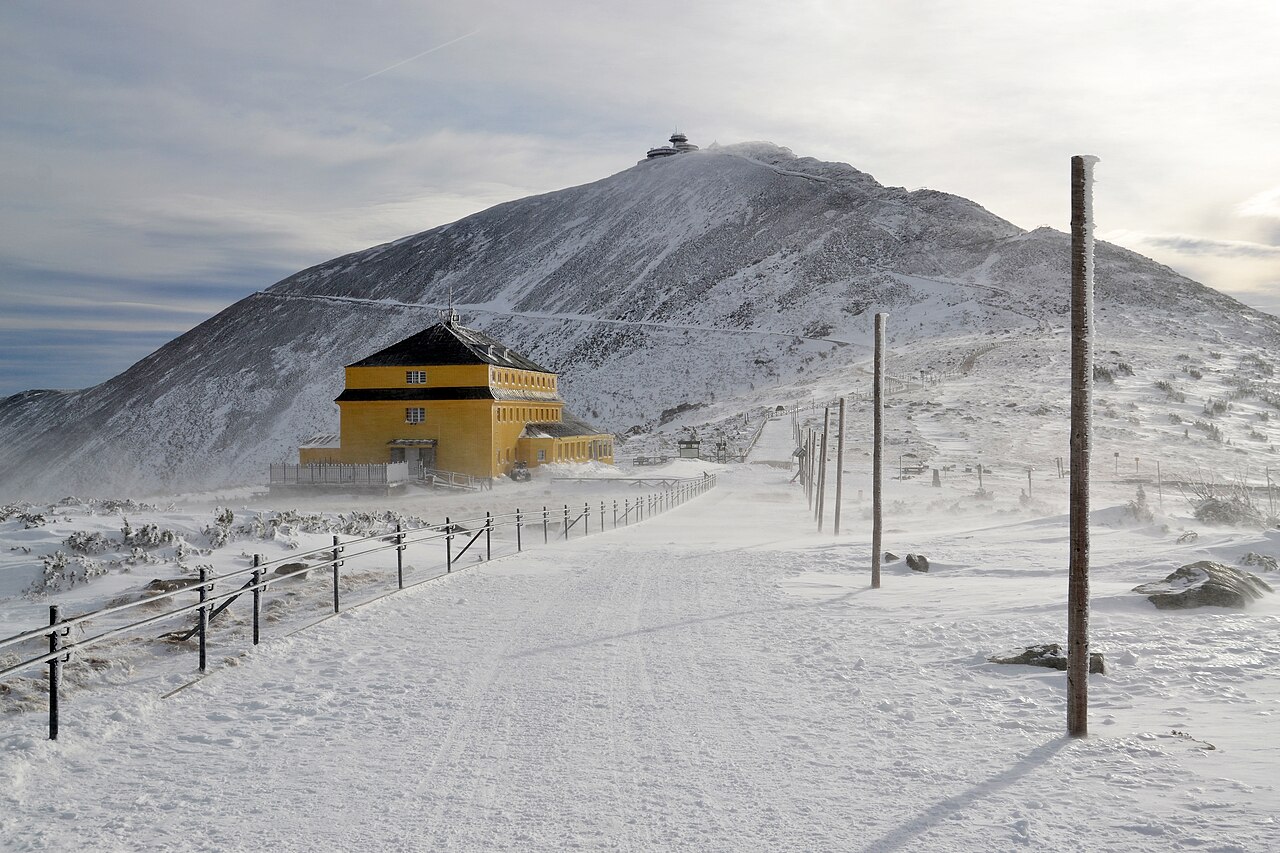
Sněžka peak in winter, Krkonoše Mountains

Krkonoše (Giant Mountains)

Intermediate – Advanced

Highest point: Sněžka 1,603 m
Base towns: Špindlerův Mlýn, Pec pod Sněžkou, Rokytnice nad Jizerou
Vertical / typical day: 500–900 m · 10–18 km

The highest and most popular range in Czechia with excellent snow reliability and a dense network of mountain huts (boudy). KRNAP maintains official ski-touring routes. Cross-border tours with the Polish Karkonosze are common.

Classic routes:

  • Labský důl — from Špindlerův Mlýn via Martinova bouda to Labská bouda, descent into the glacial valley (≈15 km, 700 m).
  • Bílé Labe / Weberova cesta — beautiful valley ascent to Luční bouda (1,410 m), return via Stará Bucharova cesta or Dlouhý důl (≈14 km, 600 m). Watch for avalanche paths.
  • Obří důl to Sněžka — classic from Pec pod Sněžkou; steep and often icy near the summit. Cable car option from Pec for partial ascent.
  • Modrý důl — quieter, good snow retention, to Výrovka.

Huts: Luční bouda (1,410 m), Labská bouda, Výrovka, Špindlerova bouda. Book ahead in peak season. Best months: January–March. Some routes have marked “skialp” trails; respect quiet zones of the national park. Avalanche paths exist in several valleys (especially Bílé Labe and Labský důl) — check HS forecasts.

Tips: Cross-border tours to Polish Karkonosze (Szklarska Poręba / Karpacz) are popular. Cable car from Pec can shorten the Sněžka approach. Strong winds on the ridges are common.
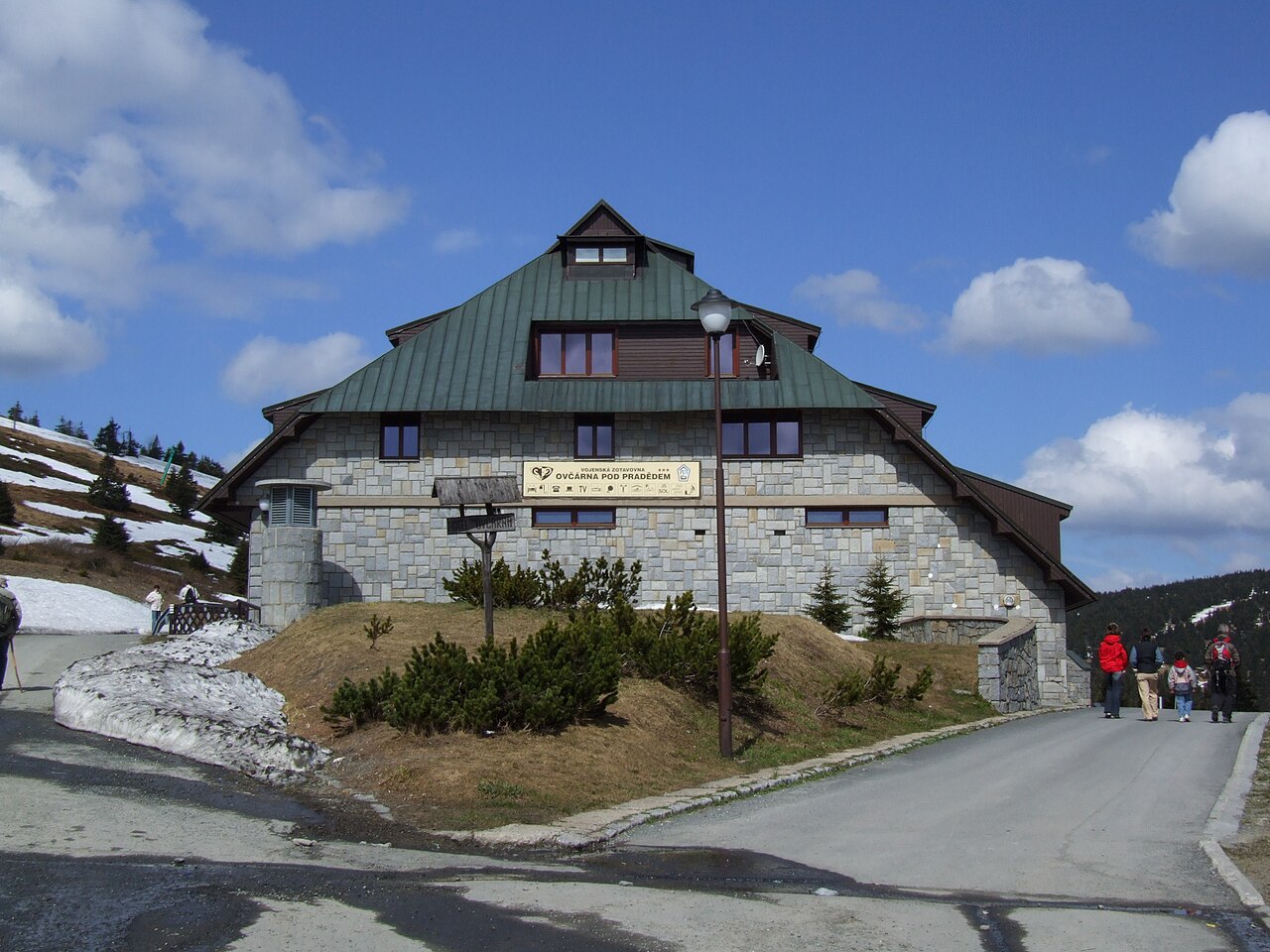
Ovčárna mountain hotel under Praděd in Hrubý Jeseník

Hrubý Jeseník

Intermediate

Highest point: Praděd 1,491 m (lookout tower higher)
Base: Kouty nad Desnou, Ovčárna, Červenohorské sedlo
Vertical / typical day: 600–1,000 m · ridge traverses

Long, open ridges above the tree line with strong wind-loaded snow and excellent plateau conditions. Quieter than Krkonoše and ideal for multi-hour ridge days.

Classic route: Kouty nad Desnou → Dlouhé stráně → Břidličná hora → Vysoká hole → Praděd → Ovčárna. Full ridge can be done as a long day or with overnight at Ovčárna (the highest overnight option in Czechia, right under Praděd). Descent options into several valleys. Strong winds common on the plateaus — wind slabs are the main hazard.

Huts: Ovčárna (main overnight base under Praděd — the highest overnight option in Czechia), Švýcárna. Good for intermediate riders building confidence on open terrain before moving to the Tatras. Wind slabs are the main hazard on the plateaus.

Tips: The Praděd–Ovčárna ski area offers a high base for short tours. Full ridge traverses can exceed 20 km. Visibility can drop quickly in fog.

Forested mountains

Šumava, Jizerské hory & Beskydy

Beginner – Intermediate

Highlights: Šumava ridges, Jizerské hory (Smrk, Jizera), Lysá hora (Beskydy, 1,323 m)

Lower elevation but excellent for learning skinning technique, tree skiing, and powder days after storms. Šumava offers long gentle ridges and forest roads. Jizerské hory has a strong local ski-touring community and reliable snow. Moravian-Silesian Beskydy provide steeper forested lines and easy cross-border access into Poland and Slovakia. Ideal first splitboard trips or storm-day alternatives when the higher ranges are dangerous.

Poland

Poland’s splitboarding scene is concentrated in the Tatras and the Beskids. Zakopane is the main gateway to serious alpine terrain.

Polish Tatras peaks

Tatry (Tatra Mountains)

Advanced

Base: Zakopane
Key areas: West Tatras, High Tatras (Polish side)
Vertical / typical day: 500–1,000+ m · guided tours common

True alpine terrain with steep couloirs, rocky peaks, and excellent powder after storms. National park rules are strict — many zones require a licensed guide. Avalanche risk is high; check TOPR daily.

Popular objectives:

  • Rakoń and Trzydniowiański Wierch (West Tatras) — classic intermediate-to-advanced day tours from the Polish side.
  • Areas around Kasprowy Wierch — good access via cable car, then skin or ride off the groomed trails (respect park rules).
  • Multi-day “Tatras Haute Route” style trips linking huts (e.g., Five Lakes Valley / Dolina Pięciu Stawów).

Access: Park in or near Zakopane; taxis or buses to trailheads. Huts available for overnight. Best with a guide if new to the area. Season: January–April.

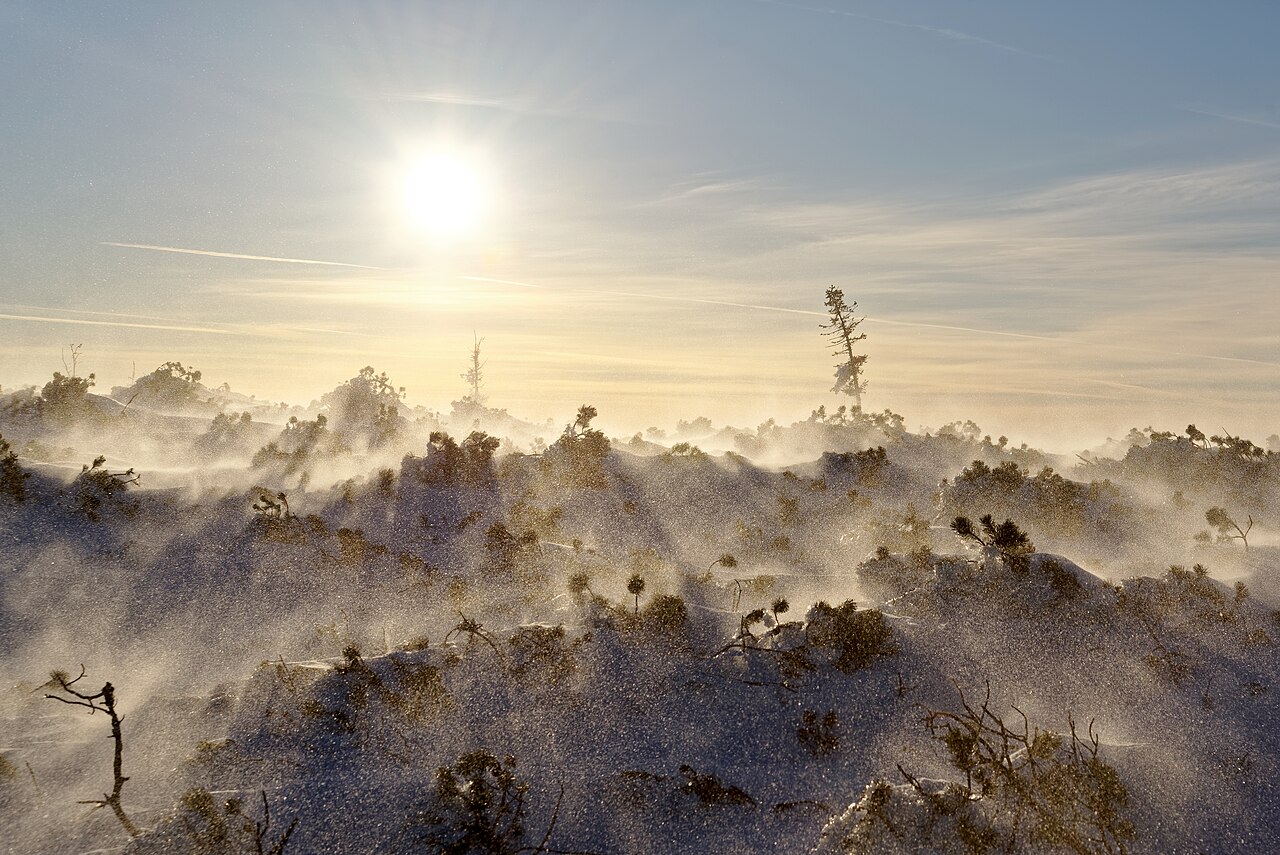
Babia Góra in winter snowstorm

Beskidy (Beskids)

Beginner – Intermediate

Highlights: Babia Góra (1,725 m), Pilsko, Szyndzielnia
Vertical: 600–900 m typical day

Babia Góra (“Queen of the Beskids” / Diablak, 1,725 m) offers one of the best vertical drops in Poland outside the Tatras, with open upper slopes and good tree skiing lower down. More accessible and less restricted than the Tatras. Excellent for day trips from southern Poland. Pilsko and surrounding ridges give additional options after storms. Strong local community and easier logistics than the High Tatras.

Access: From Zawoja or Krowiarki. Typical ascent 700–900 m. Avalanche risk is lower than the Tatras but still present on steep faces. Check Babiogórski National Park rules and GOPR forecasts.

Karkonosze / Polish Giant Mountains

Karkonosze

Intermediate

Bases: Szklarska Poręba, Karpacz
Highlights: Szrenica, Kopa, cross-border ridges to Czech side

Polish side of the Giant Mountains. Good snow, well-marked routes, and easy combination with Czech Krkonoše. Popular for day tours linking both sides of the border. Less alpine than the Tatras but reliable and less crowded than the highest peaks.

Slovakia

Slovakia holds the highest and most dramatic mountains of the three countries. The Tatras and Low Tatras are the main playgrounds for serious splitboarders.

High Tatras Slovakia

Vysoké Tatry (High Tatras)

Advanced – Expert

Bases: Štrbské Pleso, Tatranská Lomnica, Poprad
Vertical / typical day: 800–1,500+ m · serious alpine terrain

The only true alpine-style range in the Carpathians. Sharp peaks, glacial valleys, long descents, and high avalanche hazard. Strict TANAP rules — many routes require a licensed mountain guide. Excellent hut system makes multi-day trips realistic.

Key zones & routes:

  • Popradské pleso & Mengusovská dolina — classic access, huts, and lines toward the high peaks (including approaches to Rysy).
  • Mala Studená dolina — quieter valley with good splitboarding options and hut access.
  • Chata pri Zelenom plese → Téryho chata → Zbojnícka chata — classic multi-day high route with 2,300 m+ passes. Demanding and exposed.
  • Rysy (shared with Poland) — long descent potential (~2,000 m) but technical and heavily regulated.

Huts: Chata pri Zelenom plese, Téryho chata, Zbojnícka chata, Chata pod Rysmi. Book well in advance. Best with IFMGA guide. Season: late December–April (conditions vary sharply by aspect).

Low Tatras Chopok ridge at sunset

Nízke Tatry (Low Tatras) – Chopok

Intermediate – Advanced

Base: Jasná / Demänovská Dolina (north) or Srdiečko / Trangoška (south)
Highest points: Chopok 2,024 m · Ďumbier 2,043 m
Vertical / typical day: 800–1,200 m · 5–8 hours

The most practical and popular splitboarding destination in Slovakia. Long ridge, reliable snow, excellent access via the Jasná ski area (or pure skinning), and a mix of open slopes and tree lines. Perfect for both day trips and multi-day tours. Less severe than the High Tatras but still offers real vertical and variety.

Classic objectives:

  • Chopok from north (Jasná / Lúčky) — skin the edge of the slopes or pure touring lines; ≈5.5–7 km, 1,000–1,150 m to the summit. Kamenná chata just below the ridge.
  • Ridge Chopok → Ďumbier — scenic traverse (≈2 hours between peaks), then descent options north or south. Full circuit from south (Trangoška / Srdiečko) via Štefánik hut is popular.
  • From Zadná voda / Biela Púť for quieter approaches avoiding the main resort crowds.

Huts: Kamenná chata pod Chopkom, Chata M. R. Štefánika, Rotunda. Lifts can shorten approaches. Strong recommendation for intermediate riders progressing toward the High Tatras.

Western Tatras

Západné Tatry & Žiarska dolina

Intermediate – Advanced

Base: Žiarska dolina (near Žiar)
Key peaks: Baranec 2,185 m · Baníkov 2,178 m · Príslop
Vertical / typical day: 1,000–1,400 m

Western Tatras offer more open, less rocky terrain than the High Tatras while still delivering serious vertical. Žiarska dolina is one of the best-known valleys for ski touring and splitboarding in Slovakia, with varied lines for different levels. Close to the Polish border.

Classic lines & peaks:

  • Baranec — dominant peak of the valley; several descent options (Hungarian, Spring, Central). Central is the steepest.
  • Baníkov & Príslop — higher technical lines; Baníkovský kotol and surrounding faces for experienced riders.
  • Beginner-friendly options around Lúčne, Smutné, and Žiarské sedlo.

Access: Park at the mouth of Žiarska dolina; skin or walk the road to Žiarska chata (1,325 m) then continue. High avalanche potential — one of the more avalanche-prone areas in Slovakia. Best with local knowledge or a guide. Season: January–April.

Essential Safety Notes

Avalanche awareness is non-negotiable. The Tatras (both Polish and Slovak sides) regularly reach danger level 3–4. Carry a transceiver, probe, and shovel; know how to use them. Check the daily bulletin from TOPR (Poland) or HZS (Slovakia) / HS ČR.

Ready to Earn Your Turns?

Start with the Low Tatras or Krkonoše if you are building experience, then progress to the High Tatras with a guide. The combination of reliable snow, cultural proximity, and uncrowded ridges makes this corner of Europe one of the best-kept secrets for splitboarders in Central Europe.

Back to the main guide: What is a splitboard? · Polski · Čeština · Slovenčina